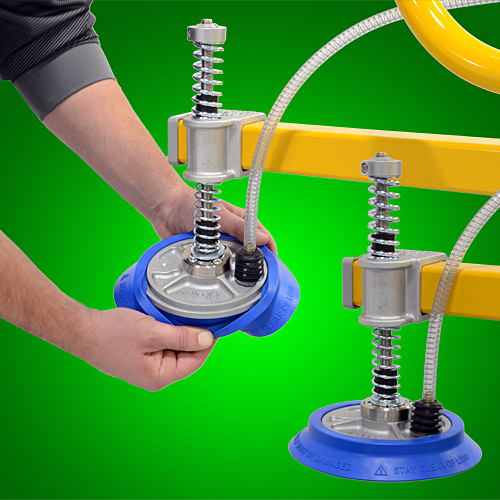
Cup Cleaning Rubber Suction Cup and Sealing Ring Pad Care – Vacuum Cup Cleaning is easy We are often asked how to properly clean rubber suction cups and sealing rings. Routine maintenance is essential for extending the life of vacuum equipment and ensuring safe, reliable performance. There is no single “best” cleaning method, as requirements can vary depending on the application and type of contamination. However, a simple and effective approach is to use a spray bottle with a mixture of mild dish soap and distilled water. This solution helps remove dirt and debris while leaving minimal residue. For faster drying, a small amount of denatured alcohol can be added to the mixture, though this is optional and not typically necessary. In general, most mild household dish soaps combined with distilled water will safely clean rubber components. Automotive rubber cleaners can also be used, provided they do not leave behind a greasy or glossy residue. It is important to avoid rubber protectants or dressings that create a slick surface. These products can reduce grip and may cause vacuum cups to slip or “hydroplane,” compromising performance and safety. If an automotive rubber product is used, select a matte, non-gloss finish to minimize this risk. Citrus based cleaners or Mineral Spirits work well and are commonly available. Both are inexpensive and can be found at any hardware store. Mineral Spirits used with a wash cloth type rag actually cleans well if used occasionally. Alcohol based products will dry out rubber if used frequently but they will remove greasy dirt on the rubber. Even hot dishwashing soap and water sometimes work well depending on the nature of the dirt on the rubber. Rubber needs protection against the two main environmental enemies of Rubber Elastomers which are UV Ultraviolet Light and Ozone. This is what ages, hardens and starts to make cracks in the rubber sometimes referred to as dry rot. We recommend a non-greasy, ultra violent light and ozone protectant cleaner used with a wash cloth type rag. This is good for rubber cup lifters used outdoors. These type protectants are big in the marine industry which is the toughest of environment rubber comes in contact with. Technical Glycerin has recently been marketed as a special cleaner for some reason. We have tested it and found it does not do anything more than other common rubber dressing. On the negative side it leaves a greasy soapy film that attracts dirt fast and makes the cups slippery. Because of the film it leaves it ranked as one of the worst rubber protectants and we would not recommend it. Keep in mind how rubber handles an environment and performs is usually stated on rubber “swell” percentage. This is the reaction of rubber to another chemical it is coming in contact with. The rubber will swell and get sticky and soft. The percentage of swell determines how badly the rubber is affected by the chemical.
|